
what i use
These are my go-to sewing tools - the ones I reach for and use every single day. Simple, practical, and always close at hand!
Sewing Tools*
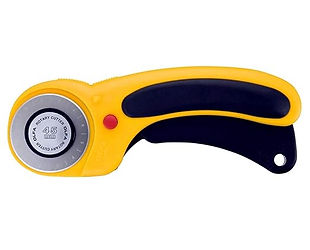


Rotary Cutter
My favourite tool! I'll use a rotary cutter for most projects, unless my patten pieces are too big for a cutting mat.
Cutting Mat
If you are going to use a rotary cutter, it is essential that you use a cutting mat too to protect your surfaces. I use this Olfa mat, but any brand will do.
Mats come in different sizes. If you have the space (and budget), or do a lot of dressmaking, I'd say get the larger size. But this isn't necessary for all sewists.
iron
The most asked question I get is 'what iron do you use?' and this is it! The Prym mini team iron, great for small patchwork and great to set up next to your sewing machine for quick access.
iron Mat
If you are using a smaller iron, a small mat goes hand in hand. At the moment I am using the wool mat, but I'm not precious about these. Any ironing mat will do!


Pins
Simple but essential—pins are the quickest way to hold fabric in place before sewing. I use them for everything from piecing patchwork to lining up seams, and I always keep a pot of them nearby.
Clips
These little clips are a handy alternative to pins. They hold layers of fabric together without leaving holes, and they’re especially useful for thick projects like quilts or binding edges.
Ruler
I’ve built up a little collection of quilting rulers in all shapes and sizes. The long 6x24" Olfa ruler is the one I rely on for most cutting, while the smaller squares (like my 6.5") are perfect for trimming and tidying up blocks.
Scissors
I’ve gathered a mix of scissors over time, different sizes and price points -but these budget-friendly pairs are the ones I still keep close for everyday sewing.
* Some links on this site are affiliate links. If you choose to buy through them, I may earn a small commission at no extra cost to you. I only share products I use and genuinely recommend.
Sewing Machines
I haven’t tried every machine out there, but I’ve spent plenty of time with a few trusty ones! Here’s a look at the machines I've use and would recommend -
high end machines

Juki DX7
This is the sewing machine I use most often now. It’s sturdy, reliable, and has all the features I need for everyday sewing—from garment making to quilting.

Juki MO-2500 Sumato
My current overlocker, and honestly a bit of a game-changer. It’s smooth, easy to thread, and makes finishing seams feel effortless.
mid-range machines

Elna eXperience 570α
This was my very first machine, passed down from my mum. It’s where I really learned to sew properly, and it still holds a special place in my sewing journey.

Janome Airthread 2000D
An overlocker alternative I’ve used and loved. The air threading makes setup so much easier, and it’s great for getting those neat, professional finishes without the usual threading hassle.
choosing a machine
The best sewing machine is the one that fits your needs - not necessarily the most expensive or feature-packed option.
Think about the kind of sewing you want to do: if you’re mainly quilting, a machine with a wider throat space and walking foot will make life easier; if you’re dressmaking, look for good stitch options and buttonhole settings.
Beginners don’t need to spend a fortune - reliable entry-level machines can take you a long way. If possible, try a few models in person, or read reviews from sewists who use them for the same projects you’re interested in.
And remember, every machine has a learning curve, so give yourself time to get to know it - it’s often less about the “perfect” machine and more about building confidence with the one you have.